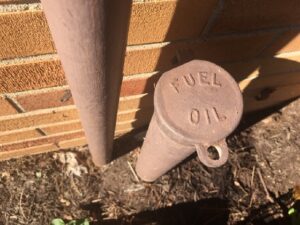
 Between the days of heating a home with coal and today’s natural gas there was a period of high demand for fuel oil as customers converted and modernized their heating systems. Starting in the 1940’s heating oil was considered a cleaner alternative to coal and so much easier to store. This love affair continued thru the 1960’s, where oil had about thirty two percent of the home heating market.
Heating oil, basically diesel fuel was cost effective and has a high BTU (heat) output per gallon used, the only down sides are that the furnace requires annual servicing, the heating oil can smell and the need for a fuel tank.
There are three types of fuel tanks, above ground, indoor (generally in a basement) and buried. Today the fuel oil market has dropped to about 7% of the heating units in the country and most of them are located in rural homes. This leaves a lot of unused, abandoned oil tanks in homes across America. These unused tanks must be removed if they are not in use, which can be problematic at times.
Above ground tanks were not that common and are easily removed if no longer required, indoor tanks were often placed in the basement before the framing was installed and underground (buried) tanks were generally installed close to the foundation.
Above ground tanks were not that common and are easily removed if no longer required, indoor tanks were often placed in the basement before the framing was installed and underground (buried) tanks were generally installed close to the foundation.
Tanks in basements create a challenge for the removal specialist because there is often no way to get the tank out in one piece and more often than not, there is fuel oil still in the tank. The fuel oil must be professionally removed, the tank cut apart and any fuel oil spills cleaned up.
Then there are the buried tanks, these are a huge problem. First of all, any fuel remaining in the tank (and the generally is) must be removed, failing tanks can often be filled with a mixture of fuel and water which increases the cost.
Then there are the buried tanks, these are a huge problem. First of all, any fuel remaining in the tank (and the generally is) must be removed, failing tanks can often be filled with a mixture of fuel and water which increases the cost.
Some municipalities in our area require the fire department and a hazmat crew to be on site as the tank is dug up. They often require the soil around the tank to be removed and brought to a hazardous materials landfill.
All to often we will identify an oil fill and breather pipe against the outside of a home that has a gas furnace. Those breather pipes ate a tell tail indication that there is an abandoned buried fuel tank that needs to be removed. Depending on where the tank is located, under a patio, access blocked by trees etc, it’s overall condition, its size, if its has leaked will affect how much it will cost to have it removed.
Prices range from a few hundred dollars to remove a empty above tank to thousands of dollars to have a buried tank removed.
Prices range from a few hundred dollars to remove a empty above tank to thousands of dollars to have a buried tank removed.








Thanks for this helpful guide! I didn’t realize buried oil tanks can cause so many issues—like fuel left inside, leaks, and high removal costs. Very informative and easy to follow. Much appreciated!
Thanks for sharing such clear and helpful tips.
Really helpful read—thanks for sharing this advice.