Remedy Phase #1
Most people’s first thought is to call in a professional basement waterproofing contractor, and this may eventually become necessary. But before doing that, attempt to stop the dampness yourself by removing or reducing the problem, which is probably poor water management and drainage around the outside of the home.
 This will need to be done anyway.
- Is all the siding attached, are all the windows properly fitted? In many cases water enters through rotten windows.
- Is the clothes dryer vented to the outside, or has the pipe become clogged or disconnected?
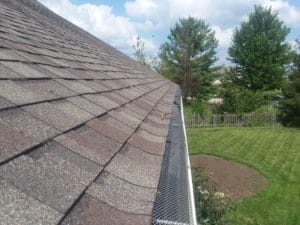
- Are all the gutters secure, do they overflow? Gutters are needed along the bottom edge of all roofs, and downspouts are essential.
- Inspect all drains from downspouts and drains in basement window wells making sure that they are not blocked.
- Add clear plastic window well covers to all basement windows.
Begin by diverting or piping away all the water coming from the downspouts. Three feet is a start, 10 feet would be good, but the further it can be piped or diverted away from the building the better.
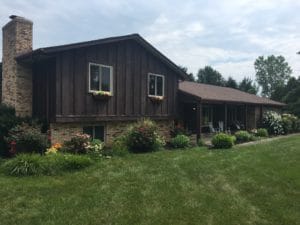 Re-grade the landscaping making sure that it all slopes away from the house, even if it is only a gentle slope. Flower beds should be higher than the lawn. Lawn is better than flower beds because it does not let as much water through.
Patios (concrete slabs) often sink or settle and then channel water towards the house. These would need to be repaired, instead of replacing them it may be possible to have them leveled by a slab jacking company, this is less expensive than replacing the concrete.
The driveway must slope away from the building. Any area surrounding the house that tends flood or appears waterlogged after it rains should be drained. If your neighbors property drains on to your property, consider installing a drain or swale (ditch) that would break the flow of water before it reaches your house.
Remedy Phase #2
If you have tried to rectify the basement damp by doing everything listed in phase #1 and there is still a damp or mold problem, continue here.This section is separated into concrete block foundations and below that, poured concrete foundations.
Concrete Block Foundation
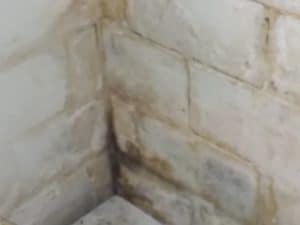
Once concrete block gets cracks or starts to deteriorate it is very hard to stop the deterioration, without stopping the water penetration that is doing the damage.
 You will want to consider having a waterproof barrier and drain system installed on the outside of your home. To do this a trench is dug around the house; this trench is dug down below the floor level of the basement. Plastic drainpipe is then installed to take the water away from the house. In cases where the pipe does not have the ability to drain away from the house a sump pump is installed. The pipe is then covered with pea gravel. The complete foundation is sprayed with a tar type sealant (a Polymer based coating) and sheets of Styrofoam with special water channels are secured to the wall. The sheeting creates a solid barrier that funnels water into the drain at the base of the foundation.
Do not use any system that deals with the problem by managing it on the inside, these systems are only a cosmetic repair that do not stop the deterioration of the block foundation.
NOTE: Epoxy or polyurethane crack sealant is not very successful at stopping water penetration on block foundations.
 Poured Concrete Foundation
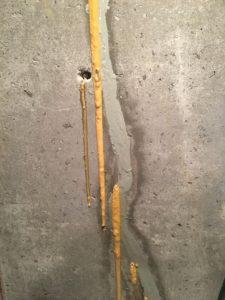
Poured concrete foundations tend to have few problems that cannot be solved easily. Over time with settling cracks may appear that let in a small amount of water. On this type of foundation, epoxy or polyurethane crack sealant is very successful at stopping water penetration through cracks in the concrete. If the walls are damp they may need to be sealed, and an external barrier and drain system installed.
Wet Floors
This problem is usually solved when outside water or foundation wall problems are resolved. If the problem is serious and persists, a series of drains connected to a sump pump may need to be installed.
NOTE: We strongly suggest that you do not use over-the-counter surface type waterproofing sealant! More often than not, they fail and will have to be removed adding additional cost and aggravation!