Rain. When water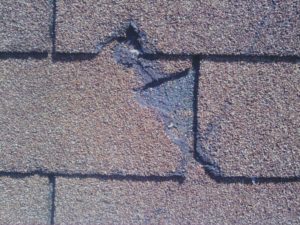 gets underneath shingles or other roofing materials, it can work its way to the roof decking causing the roof to rot.
Wind. Strong winds can lift shingles or other roofing materials, forcing water or debris underneath them. Wind damaged shingles should be repaired immediately.
Sun. Heat and ultraviolet rays cause roofing materials to deteriorate over time. Deterioration occurs faster on the south and west facing sides.
 Snow. Melting snow often re-freezes at the roof’s overhang where the surface is cooler. This then forms an “ice dam”. The ice then turns to water as it melts and backs up under the shingles and the decking, often seeping into the house. Good attic ventilation can help to minimize this problem.
Condensation. This is the result of the air temperature in the attic not being close enough to the exterior temperature. Condensation promotes rot and decay of the wood sheathing and the rafter system. Proper attic ventilation solves this problem.
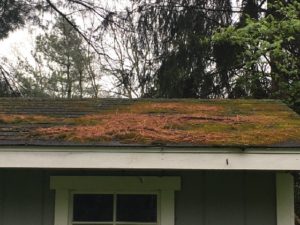
Moss and Algae. Grows on moist shingles. The more the moss or algae grows the more moisture it will hold, keeping the roofs surface wet which, in turn, causes rot. Its roots work their way through the shingles and into 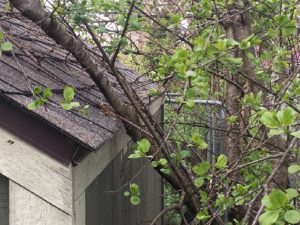 the wooden decking causing tremendous damage. Trim any tree branches that are shading the roof. Use a weak solution of bleach and water applied with a sponge a couple of times a week. Do not scrub – just dab it on. This should kill the moss and algae within a short length of time.
Trees and Leaves. Branches rubbing and scratching will damage the roofing materials, shortening the roof’s life dramatically.
Remember, when it rains (or , especially during a snow or ice storm) tree branches will bend down more than they normally do. Trim appropriately. Leaves left on a roof retain moisture, rotting the surface.
We recommend gutter screens for all gutters.
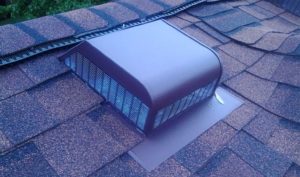 Flashing Deterioration. Flashing is the seal between the roof and other components that are on (or protrude through) the roof such as chimneys, vents, metal poles and skylights, etc. Flashing is usually made of aluminum or other metal and is often sealed with tar.
NOTE: Old lead flashing should be replaced, over time it becomes porous and leaks. Not commonly found anymore.
Extremes in temperature and harsh weather conditions cause the tar to fail within a few years. Flashing should be checked every spring and fall for such deterioration.